

Don't think of Fulfillment by eBay as a single, giant warehouse like you see with Amazon FBA. It's actually a curated network of different third-party logistics (3PL) partners. It’s less like a massive corporate storage unit and more like a logistics marketplace, with eBay playing the role of the connector who vets and brings these specialized providers together.
What Is Fulfillment by eBay and How Does It Work
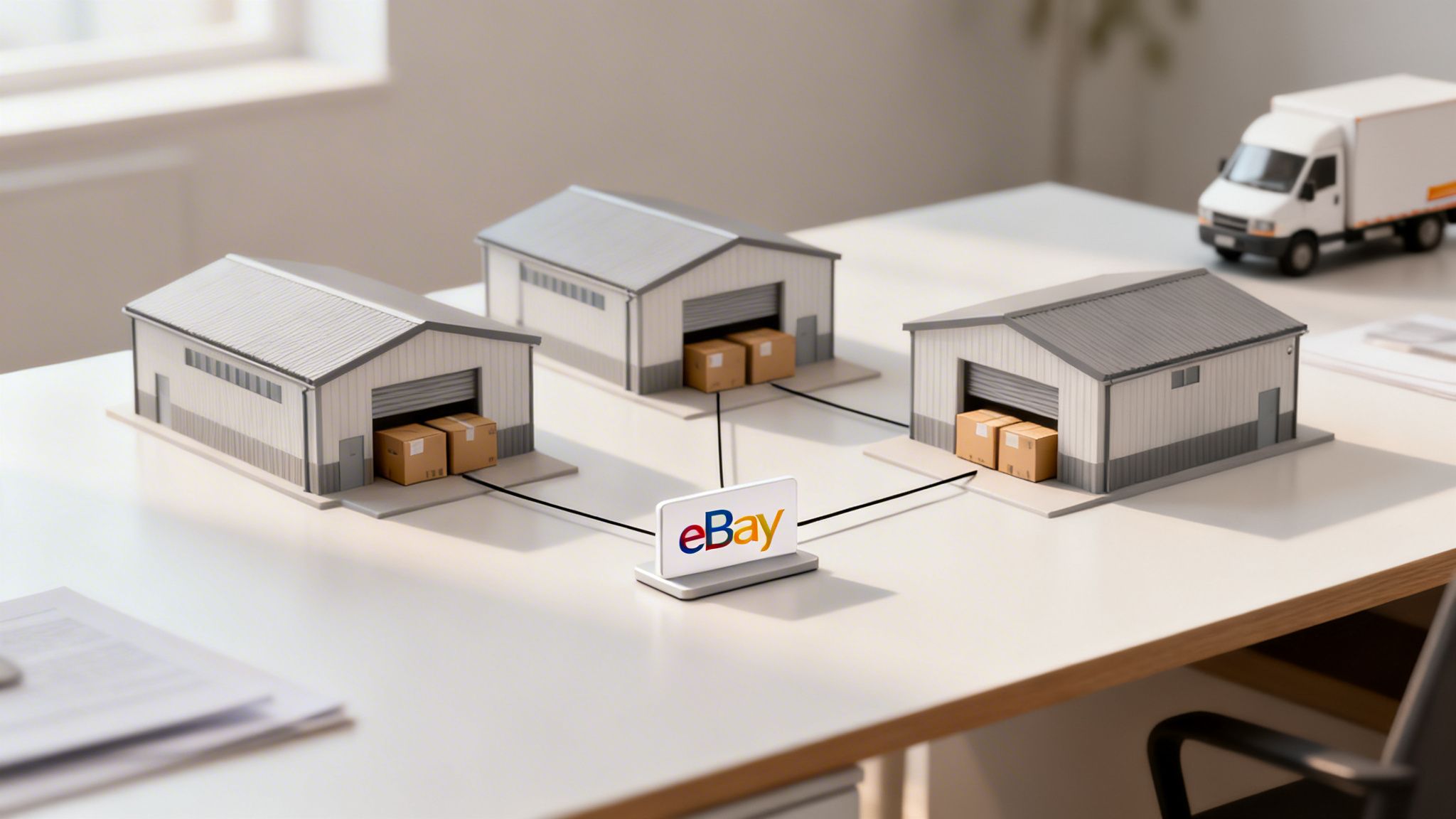
This image from eBay's Seller Center nails the core idea. Instead of one massive, centralized system, it's a decentralized network built to give sellers flexibility and choice. You aren't locked into a one-size-fits-all solution; you get to pick a logistics partner that actually makes sense for your business.
The process itself is pretty straightforward. As the seller, you ship your inventory to a pre-approved 3PL partner in eBay’s network. When a customer buys something from your eBay store, the order gets zapped over to your chosen logistics provider automatically. From there, their team handles the professional picking, packing, and shipping directly to your customer.
The Network-Based Approach
The real strength of this model is its distributed nature. Instead of trying to do everything itself, eBay leverages the existing expertise of established logistics companies. This gives you, the seller, access to a whole suite of professional services without having to build out your own fulfillment operations from scratch.
Ultimately, Fulfillment by eBay is all about streamlining your sales process. It leans heavily on things like efficient e-commerce packaging to make sure your products get to customers safely and on time.
To get a clearer picture of how this works, let's break down the key features in a quick summary table.
Fulfillment by eBay at a Glance
| Aspect | Description |
|---|---|
| Model | A network of vetted third-party logistics (3PL) partners, not a single eBay-owned warehouse. |
| Process | Sellers send inventory to a 3PL partner. When an order is placed, the 3PL picks, packs, and ships it. |
| Integration | Your eBay account syncs directly with the 3PL's system for automated order and inventory management. |
| Flexibility | Sellers can choose the logistics partner that best fits their product type, volume, and budget. |
| Multi-Channel | Many partners can fulfill orders from other platforms, creating a single inventory hub. |
This table highlights how the program gives sellers a flexible, integrated way to manage their logistics.
The key components driving this system are:
- Vetted 3PL Partners: eBay does the legwork, carefully selecting logistics providers to make sure they meet high standards for performance and reliability.
- Direct Integration: Your eBay seller account talks directly to the 3PL's software. This is what automates order transmission and keeps inventory levels updated in real-time.
- Multi-Channel Capability: A big plus is that many partners in the network can handle fulfillment for orders from other places, not just eBay. This lets you centralize your inventory even if you're selling across multiple digital marketplaces.
How It Differs from In-House Fulfillment
If you're used to packing boxes in your garage, this system is a major operational upgrade. It outsources the most time-sucking parts of e-commerce—storage, packing, and dealing with shipping carriers. That frees you up to focus on the things that actually grow your business, like sourcing great products and marketing your store.
This service is really designed to bridge the gap for sellers who have outgrown doing it all themselves but aren't quite ready for a massive, custom 3PL contract. It’s a scalable, pay-as-you-go solution that can grow right alongside your business.
At the end of the day, the goal is to help you offer faster, more reliable shipping. That’s a huge factor for success on a competitive platform like eBay. By tapping into a professional network, you can seriously boost customer satisfaction and, in turn, improve your all-important seller ratings.
The Seller Onboarding Process Step by Step
Jumping into Fulfillment by eBay isn't about flipping a single switch. It’s a structured process designed to match your business with the right logistics partner, almost like a guided journey where eBay helps you find and integrate with a professional fulfillment center. The whole point is to make the transition from packing your own boxes to having a dedicated partner handle it for you as smooth as possible.
It all starts with confirming your eligibility. Not every seller can join right away, as eBay often looks for established sellers with consistent sales volume to make sure their 3PL partners have a steady stream of orders.
Confirming Eligibility and Accessing the Program
First things first, you’ll need to check your eligibility directly through the eBay Seller Hub, which is usually tucked under the "Shipping" or "Selling Tools" sections. eBay has a specific list of requirements that often include things like your seller performance standards, sales history, and the types of products you sell.
Once you confirm you meet the criteria, you can express interest in the program. This tells eBay you're ready to start looking at their network of pre-vetted 3PL partners.
Selecting Your Ideal 3PL Partner
This is probably the most critical decision you'll make in the entire process. eBay will give you a list of their approved logistics providers, and each one has its own strengths. Your job is to pick the one that fits your business like a glove.
Keep these key factors in mind when you're comparing your options:
- Geographic Footprint: Where are their warehouses? A partner with facilities closer to your customers can slash shipping times and costs.
- Product Specialization: Does the 3PL know how to handle your specific products? Managing fragile electronics is a world away from dealing with apparel or oversized goods.
- Order Volume Capacity: Can they keep up with your current sales volume? More importantly, can they scale with you during the holiday rush?
- Pricing Structure: Get granular here. Compare their fulfillment fees, storage costs, and any extra charges for things like returns processing or special handling.
Choosing a 3PL partner is like hiring a new operations team. You need to trust their expertise, understand their costs, and be confident they can support your growth. Take your time and vet each option carefully.
Technical Integration and Inventory Prep
After you’ve picked your partner, it’s time for the tech side of things. This means connecting your eBay store directly to your new partner’s warehouse management system (WMS). This connection is what automates the flow of order and inventory data, which is the heart of how Fulfillment by eBay works.
Your chosen 3PL will walk you through this step with detailed instructions, and it’s often as simple as a software integration or an API connection. Once it's set up, any order a customer places gets zapped instantly to the warehouse for picking and packing—no manual work on your end. For a deeper dive into optimizing your digital storefront, check out our marketplace evaluation test.
Finally, you’ll prepare and send your first inventory shipment to the 3PL's warehouse. They'll give you specific guidelines on how to label your products and package your shipment so it can be checked in and stored efficiently. Once your inventory is in their system, your Fulfillment by eBay service is officially live, and your new partner will start shipping orders for you.
Before you jump into any fulfillment service, you have to get comfortable with the numbers. Getting a clear picture of the Fulfillment by eBay cost structure is non-negotiable if you want to accurately project your profits and make a smart business decision.
Forget a single, flat rate. The fees are broken down into a few core components that directly tie into the services you actually use.
The model is built as a pay-as-you-go system. Think of it like your utility bill—you only pay for the electricity and water you actually use. This setup helps you sidestep the massive upfront costs of leasing a warehouse or hiring your own staff, making professional-grade logistics much more accessible for growing businesses.
The costs you'll see with Fulfillment by eBay fall into three main buckets. Nailing down each one will give you a complete financial picture of how this service will really impact your bottom line.
Core Cost Components
Let's break down the main fees you'll run into. Each one is tied to a specific part of the logistics chain, from the moment your inventory hits their warehouse to when it lands on a customer's doorstep.
- Fulfillment Fees: This is the big one. It covers the entire "pick, pack, and ship" process. When an order comes through, this fee pays for the labor to find the item, box it up securely, and get it to the shipping carrier. It’s almost always calculated based on your item's size and weight.
- Monthly Storage Fees: This is the cost of renting shelf space in the 3PL partner's warehouse. It’s calculated based on the volume your products take up, usually measured in cubic feet. The longer your stuff sits, the more storage fees you'll rack up.
- Other Potential Costs: Beyond the two main fees, you might see extra charges for certain services. These could include inbound receiving fees (for processing your incoming inventory), returns processing, or special handling for items that are oversized or fragile.
A Practical Cost Example
To make this real, let's imagine you sell a popular electronic gadget. It’s a standard-sized item, weighing about 1.5 pounds and measuring 8 x 6 x 4 inches.
Based on typical 3PL pricing, your fulfillment fee for an item like this might land somewhere around $5.00 – $7.00 per order. The monthly storage fee for its tiny footprint (0.11 cubic feet) could be just $0.10 per month. Your primary cost, then, is directly tied to a successful sale, not just letting inventory collect dust.
This structure is designed to reward quick inventory turnover. The faster you sell your products, the lower your relative storage costs become—a fundamental principle of smart inventory management. For more on this, check out our guide on how to determine the price of a product.
This pricing model also gets a major boost from the sheer scale of the eBay marketplace. In a recent quarter, eBay's Gross Merchandise Volume (GMV) hit an incredible $20.1 billion, fueled by 134 million active buyers. That kind of volume gives FBE's 3PL partners massive economies of scale, which often translates into more competitive fulfillment and storage rates for sellers like you. You can find more insights on eBay's marketplace performance on digitalcommerce360.com.
By carefully stacking these costs up against what you're spending now, you can make a data-driven decision about whether Fulfillment by eBay is the right financial move for your business.
Comparing FBE Against Amazon FBA and Traditional 3PLs
Picking a fulfillment strategy is one of the biggest decisions you’ll make as an eCommerce seller. Get it right, and you’ll streamline your operations and boost profits. Get it wrong, and you're staring down a logistical nightmare.
Fulfillment by eBay (FBE) steps into a crowded field, going head-to-head with giants like Amazon FBA and the sprawling world of traditional third-party logistics (3PL) providers.
Each of these models offers a different way to solve the same problem: getting your products to customers quickly and reliably. Understanding what makes them tick is the key to matching your operations with your business goals. FBE gives you flexibility through its network, FBA offers unbeatable integration with its own marketplace, and a traditional 3PL promises a completely custom, brand-first solution.
Which one is best for you? It all comes down to where you sell, how you plan to grow, and what you value most in your operations.
FBE vs. Amazon FBA: The Marketplace Titans
For most sellers, the first comparison that comes to mind is Fulfillment by eBay versus Amazon's own beast, Fulfillment by Amazon (FBA). They both handle your storage and shipping, but that's where the similarities end. Their core philosophies are worlds apart.
Amazon FBA is a closed-loop system. You ship your inventory to Amazon, and they fulfill orders placed on Amazon.com. That tight integration is FBA’s greatest strength—it unlocks Prime eligibility, helps you rank higher in search, and gives customers a seamless experience. If you make most of your money on Amazon, FBA is practically the default choice. If you want to dive deeper, you can learn more about what Amazon FBA is in our detailed guide.
But that strength is also a major weakness. Using FBA to ship orders from other channels—what they call Multi-Channel Fulfillment (MCF)—is a headache. For instance, to sell on Walmart Marketplace, you have to block Amazon Logistics as a carrier and make sure your packages are unbranded. It just adds layers of complexity nobody has time for.
Fulfillment by eBay, however, was built from the ground up for multi-channel sellers. Because FBE works through a network of independent 3PLs, its partners are already set up to handle orders from your own website, other marketplaces, or even social media without breaking a sweat. This makes FBE a much more neutral and flexible hub for your entire eCommerce operation.
For a multi-channel brand, FBE acts like a central command center for all your inventory. In contrast, Amazon FBA often operates more like a specialized, high-performance tool built exclusively for the Amazon ecosystem.
This diagram breaks down the main costs you can expect with Fulfillment by eBay, from fulfillment and storage to other services you might need.
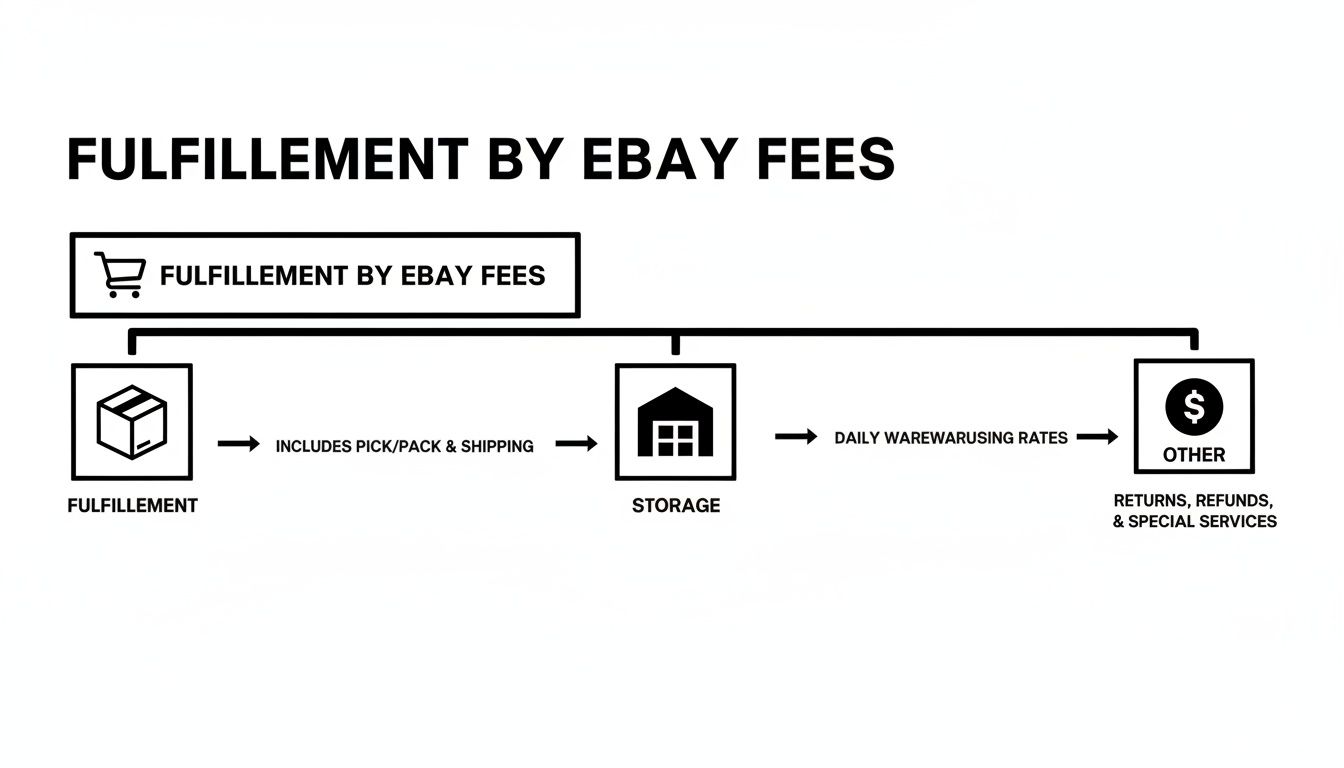
As you can see, the costs are pretty straightforward. Your main expenses are tied directly to getting orders out the door and how much space your inventory takes up.
FBE vs. Traditional 3PLs: The Battle for Control
Setting aside the big marketplaces, there are thousands of traditional 3PL providers out there. These are the companies you turn to for highly customized fulfillment services that fit your business like a glove. If you need special packaging, product kitting, or have unique handling instructions, a traditional 3PL is often the only way to go.
The trade-off here is control versus convenience. With a traditional 3PL, you get total control over your branding, packaging, and the customer’s unboxing experience. But finding, vetting, and integrating with the right partner takes a serious amount of time and effort. Contracts can be tricky, and the pricing isn't always as transparent as what you find with marketplace programs.
Fulfillment by eBay finds a sweet spot right in the middle. It gives you the convenience of a pre-vetted network, so you don't have to spend months hunting for a reliable partner. While you might not get the same level of hyper-customization as a direct 3PL relationship, you gain a streamlined, integrated experience that’s built for marketplace sellers.
Feature Comparison: Fulfillment Models
To make the differences crystal clear, we've put together a side-by-side comparison of the three fulfillment models. This table breaks down how each option stacks up across the features that matter most to sellers.
| Feature | Fulfillment by eBay (FBE) | Amazon FBA | Traditional 3PL |
|---|---|---|---|
| Primary Advantage | Multi-channel flexibility and a curated partner network. | Seamless integration with the Amazon marketplace for Prime benefits. | High degree of customization and branding control. |
| Multi-Channel Support | Excellent. Designed to fulfill orders from any sales channel. | Limited. Can be complex and restricted on other marketplaces. | Excellent. Core business model is channel-agnostic. |
| Marketplace Integration | Strong integration with eBay for automated order processing. | Unmatched integration with Amazon, boosting visibility. | Requires manual or third-party software integration. |
| Branding Control | Moderate, depends on the specific 3PL partner chosen. | Minimal, with most orders shipped in Amazon-branded boxes. | Maximum control over packaging and unboxing experience. |
| Best For | Sellers focused on eBay but also active on multiple channels. | Amazon-first sellers prioritizing Prime eligibility and growth. | Established brands needing custom solutions and brand control. |
When it comes down to it, the choice really hinges on your business strategy. If your world revolves around Amazon, FBA is tough to beat. If you need a completely bespoke solution and have the resources to manage that relationship, a traditional 3PL is your answer.
But for the modern, multi-channel eBay seller, Fulfillment by eBay offers a powerful and balanced solution that just makes sense.
Optimizing Your Inventory and Operations with FBE
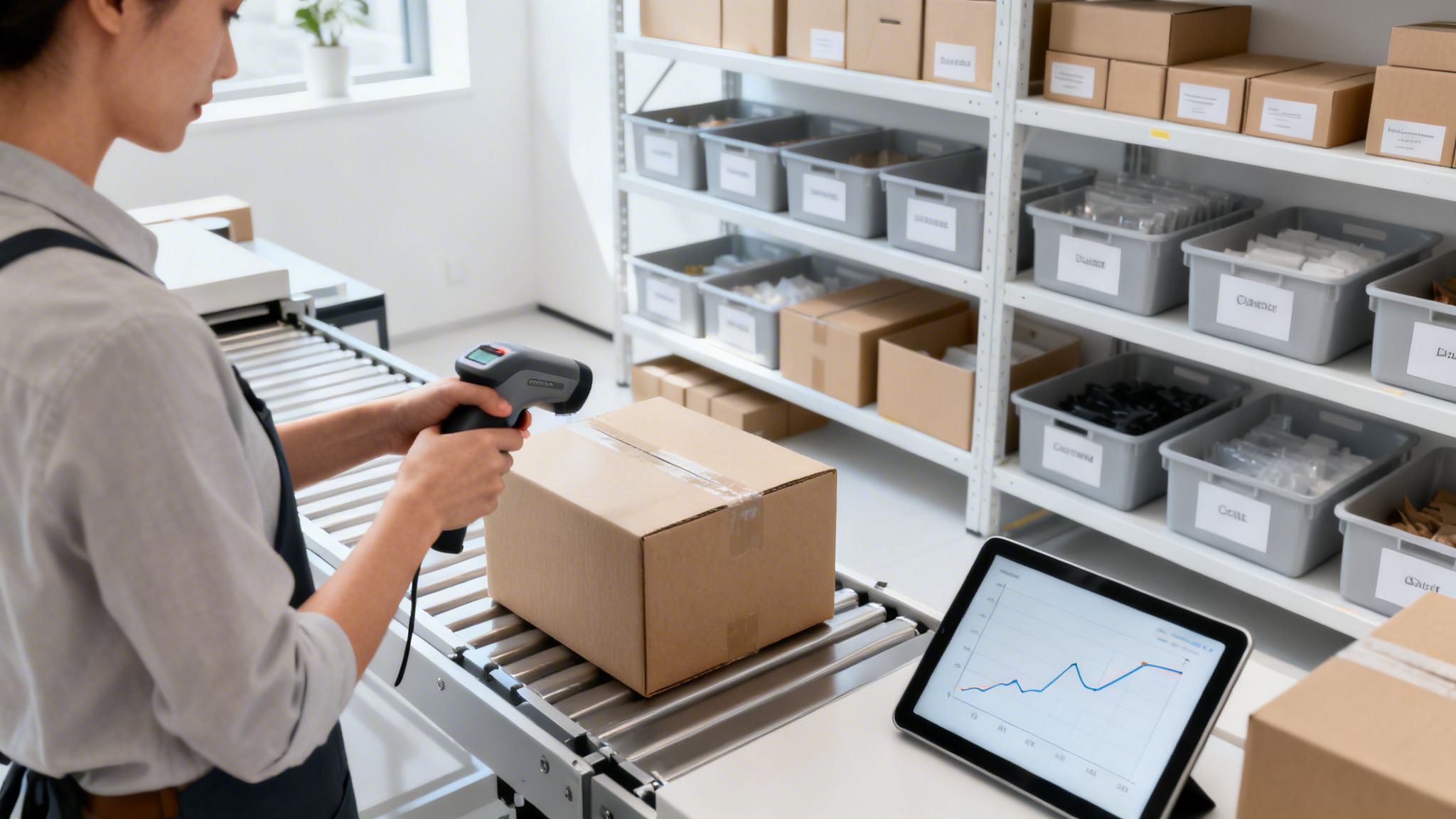
Handing off your shipping to Fulfillment by eBay is more than just an operational shift—it’s a chance to completely rethink how you run your business. It's not just a service you're buying. When managed right, it’s a powerful tool that can sharpen your profitability, make customers happier, and, most importantly, give you back your time.
To really get the most out of FBE, you have to start thinking like a logistics pro. This means moving away from just reacting to orders as they come in and toward proactively managing your inventory based on what you know your customers will want.
The data and infrastructure your 3PL partner provides are your new secret weapons. Use them right, and you can turn your fulfillment process from a cost center into a real competitive edge on the eBay marketplace.
Mastering Inventory Management
Solid inventory management is the absolute bedrock of a smart FBE strategy. Get it wrong, and you're stuck with two expensive problems: stockouts that kill your sales momentum or overstocking that bleeds you dry with storage fees. The sweet spot is having just enough product to meet demand without paying to store stuff that isn't moving.
Think of your 3PL partner's dashboard as your command center. The most important number to watch is sales velocity—how fast a specific product is selling. This single metric is the key to setting smart reorder points.
Let's say you sell 100 units of an item every month, and it takes your supplier two weeks to get new stock to the warehouse. Your sales velocity data makes it simple: reorder when you have about 50 units left. That’s how you keep sales flowing without any frustrating gaps.
Leveraging 3PL Analytics for Demand Forecasting
Your fulfillment partner isn’t just shipping boxes; they’re sitting on a goldmine of data. When you tap into their analytics platform, you can graduate from basic inventory tracking to sophisticated demand forecasting. This is a game-changer for handling seasonal swings or prepping for big sales events like Black Friday.
By looking at your historical sales data, you can spot patterns and predict future demand with surprising accuracy. This lets you strategically ramp up inventory right before your busy season, so you never miss out on sales when things get hot.
Imagine you sell a product that flies off the shelves in the summer. Your 3PL’s data can show you the exact week sales started to pick up last year. Now you can schedule your inventory shipments to land just in time, minimizing storage costs during the slow months and maximizing your stock when it counts. To get this right, it helps to understand how a modern e-commerce fulfillment center design is built for speed and accuracy.
Streamlining Returns and Syncing Listings
A painless returns process is huge for customer satisfaction and your seller ratings. Your FBE partner can handle this whole process for you. When a customer wants to send something back, your partner receives it, inspects it, and processes the refund or exchange based on your rules.
This automation doesn't just save you a ton of headaches; it gives your customers a consistent, professional experience. A quick and easy return can actually turn a potentially bad situation into a reason for a customer to come back.
Finally, one of the best operational perks of Fulfillment by eBay is real-time inventory synchronization. The link between your eBay store and your 3PL’s warehouse system means your listings are always accurate.
- Prevents Overselling: As soon as an item sells, the count is updated everywhere. No more selling products you don’t actually have.
- Improves Customer Trust: Accurate stock levels build confidence and mean fewer canceled orders and angry feedback.
- Enables Multi-Channel Sales: If you sell on other sites, this sync is even more critical. It creates a single, reliable source of truth for your entire inventory. You can learn more about finding winning products in our guide on what sells on eBay well.
By dialing in on these key areas, you can turn FBE from a simple shipping solution into a core part of your growth strategy.
When Is It Time to Partner with an Agency for eBay Growth?
Getting a system like Fulfillment by eBay up and running is a huge operational win. You’ve finally freed yourself from the daily grind of packing boxes and running to the post office. But what comes next?
Real growth isn’t just about faster shipping. It’s about building a powerful, profitable brand on the marketplace. This is where partnering with an expert agency becomes the next logical step in your journey.
Plenty of sellers hit a plateau right about here. They’ve nailed their logistics, but they’re still struggling to actually increase sales or get noticed in a crowded market. An agency acts as your strategic growth partner, connecting your now-efficient fulfillment operation to the other critical pieces of the puzzle: visibility, advertising, and brand presence.
Signs It's Time for Expert Help
So how do you know when you’ve outgrown the DIY approach? Certain growing pains are dead giveaways that you need a more advanced strategy. If any of these challenges sound familiar, it's a strong sign that bringing in a specialized team is your best move.
Keep an eye out for these common inflection points:
- Sales Are Stagnant Despite Great Fulfillment: Your orders are going out on time, every time, but your sales volume has completely flatlined. This usually means your listings just aren't getting in front of enough new buyers.
- You're Slipping in Search Results: You’ve noticed your products are sliding down eBay’s search pages, and you have no idea how to get them back to the top.
- Multi-Channel Management is a Nightmare: Juggling inventory, pricing, and marketing across eBay, your own website, and other marketplaces has turned into a logistical mess.
- You're Flying Blind with Ad Spend: You’re putting money into Promoted Listings but can’t confidently say if your ad spend is actually making you money.
An agency doesn't just manage tasks; it delivers a complete growth plan. The goal is to create a cycle where optimized fulfillment supports powerful marketing, and that marketing drives more sales for your fulfillment partner to ship out. It's a system designed for continuous growth.
A Holistic Approach to Marketplace Dominance
A top-tier agency like Next Point Digital doesn’t look at Fulfillment by eBay in isolation. We see it as the engine of your eBay business. Our job is to build a high-performance vehicle around that engine. That means integrating your logistics with a comprehensive strategy that covers every single part of the customer journey.
This integrated approach connects a few key disciplines:
- Marketplace SEO: We dig into your titles, item specifics, and store categories to align them perfectly with eBay’s search algorithm, making sure your products get discovered by shoppers ready to buy.
- Powerful Advertising: We build and manage data-driven Promoted Listings campaigns that target the right shoppers at the right time, squeezing every bit of profitable growth out of your ad budget.
- Enhanced Brand Content: We turn your listings into conversion machines with compelling copy, high-quality images, and A+ content that tells your brand’s story, builds trust, and convinces shoppers to click "Buy It Now."
Ultimately, partnering with an agency is about building a resilient, future-proof business on eBay. When you combine your hard-won operational efficiency with our strategic expertise in marketplace growth, you get a brand that can scale profitably and create a real, lasting competitive advantage.
Got Questions About Fulfillment by eBay? We've Got Answers.
Even after you get the big picture, the practical questions always pop up. It’s one thing to understand a new fulfillment strategy in theory, but it’s another to know how it’ll work for your business on a daily basis.
This section is your go-to guide for the most common questions sellers have about the Fulfillment by eBay program. We’ll tackle everything from international shipping to how it impacts your seller metrics, giving you the clear, direct answers you need to make a confident decision.
Can I Use Fulfillment by eBay for International Orders?
Yes, you can—but it all comes down to the 3PL partner you choose from eBay’s network. Many of the bigger, more established logistics providers have their international shipping operations dialed in. They can handle the tricky stuff like customs paperwork and calculating duties and taxes, making global sales feel a lot less intimidating.
When you’re vetting potential partners, this should be at the top of your checklist. Make sure you ask about their international rates, which carriers they use, and what countries they ship to. Getting this sorted out upfront means you can expand your reach without creating a logistical nightmare for yourself later.
How Does FBE Impact My eBay Seller Rating?
Using Fulfillment by eBay can give your seller rating a serious boost, especially when it comes to your shipping performance. You're handing the keys over to a professional operation that lives and breathes speed and accuracy, which feeds directly into the metrics that matter most.
- Shipping Time: Your 3PL partner gets orders out the door fast, helping you consistently hit or even beat your estimated delivery dates.
- Tracking Upload: Tracking information gets uploaded to eBay automatically, checking a critical box for seller performance.
- Customer Satisfaction: Fast, reliable shipping makes for happy customers, and happy customers leave positive feedback.
By letting a vetted professional handle fulfillment, you're minimizing the risk of late shipments and handling defects—two things that can tank your chances of keeping that Top Rated Seller status.
Think of FBE as a tool for consistency. Professional logistics partners are built to hit delivery deadlines, which protects your seller metrics and strengthens your reputation on the marketplace, ultimately leading to more visibility and sales.
Can I Fulfill Orders from Other Sales Channels?
Absolutely. This is honestly one of the biggest perks of the Fulfillment by eBay model. Since the program uses a network of independent 3PLs, most of these partners are already set up for multi-channel fulfillment. You can keep all your inventory in one spot and have them ship out orders from:
- Your own Shopify or BigCommerce store
- Other marketplaces like Walmart or Etsy
- Even social commerce platforms
This turns your fulfillment into a centralized hub, simplifying inventory management and helping you avoid the dreaded oversell. It offers a level of flexibility that’s often much harder to pull off with marketplace-specific programs like Amazon FBA.
What Happens with Customer Returns?
Your chosen 3PL partner takes care of the entire returns process, all based on the rules you set. When a customer starts a return on eBay, the item gets shipped back to your partner's warehouse, not to you.
Once it arrives, the 3PL’s team inspects the product to see what condition it’s in. From there, based on your instructions, they can either put it back into your sellable inventory, set it aside for liquidation, or dispose of it. This whole process is automated, saving you a ton of time and ensuring returns are handled professionally, which keeps the customer experience positive.
Ready to stop packing boxes and start scaling your brand? Next Point Digital connects your optimized fulfillment operations with a powerful marketplace growth strategy. We turn logistics into a competitive advantage with expert eBay SEO, advertising, and brand management. Get in touch to build your profitable growth plan.