

To become an eBay Top Rated Seller, you have to hit a few non-negotiable performance standards, and you have to do it consistently over a 12-month period. This isn't just about trying hard; it's about maintaining a razor-thin transaction defect rate, shipping on time almost without fail, and handling nearly every buyer case before eBay has to step in.
It’s a data-driven system that rewards sellers who deliver an exceptional and reliable customer experience, time and time again.
What The Top Rated Seller Badge Really Means
Earning the eBay Top Rated Seller (TRS) badge is about more than just a little icon on your listings. It’s a powerful signal of trust. In a marketplace flooded with options, that badge tells a potential buyer that you’re a serious, professional seller who consistently delivers on their promises.
That boost in confidence often translates directly into better visibility in search results and, you guessed it, more sales.
But this status isn't just handed out. It's the result of hitting precise performance targets that eBay tracks obsessively. Think of it as a scorecard for your business's health, focusing on the three areas that matter most to your customers.
The Core Metrics You Must Master
eBay’s evaluation really boils down to three critical parts of your performance. Each one has a strict threshold, leaving very little wiggle room. Getting a handle on these numbers is the first step to figuring out how to get that Top Rated Seller badge on eBay.
Here’s what they’re looking at:
- Transaction Defect Rate: This is the big one. It tracks any seller-initiated transaction cancellations (like when you run out of stock) and any cases closed without you resolving them.
- Late Shipment Rate: This simply measures how often you ship items after your stated handling time and whether you upload tracking info on schedule. Consistency is everything here.
- Cases Closed Without Seller Resolution: This tracks the rare instances where eBay has to step in to fix a buyer dispute because you couldn't, or wouldn't.
This image breaks down the exact targets you need to aim for.
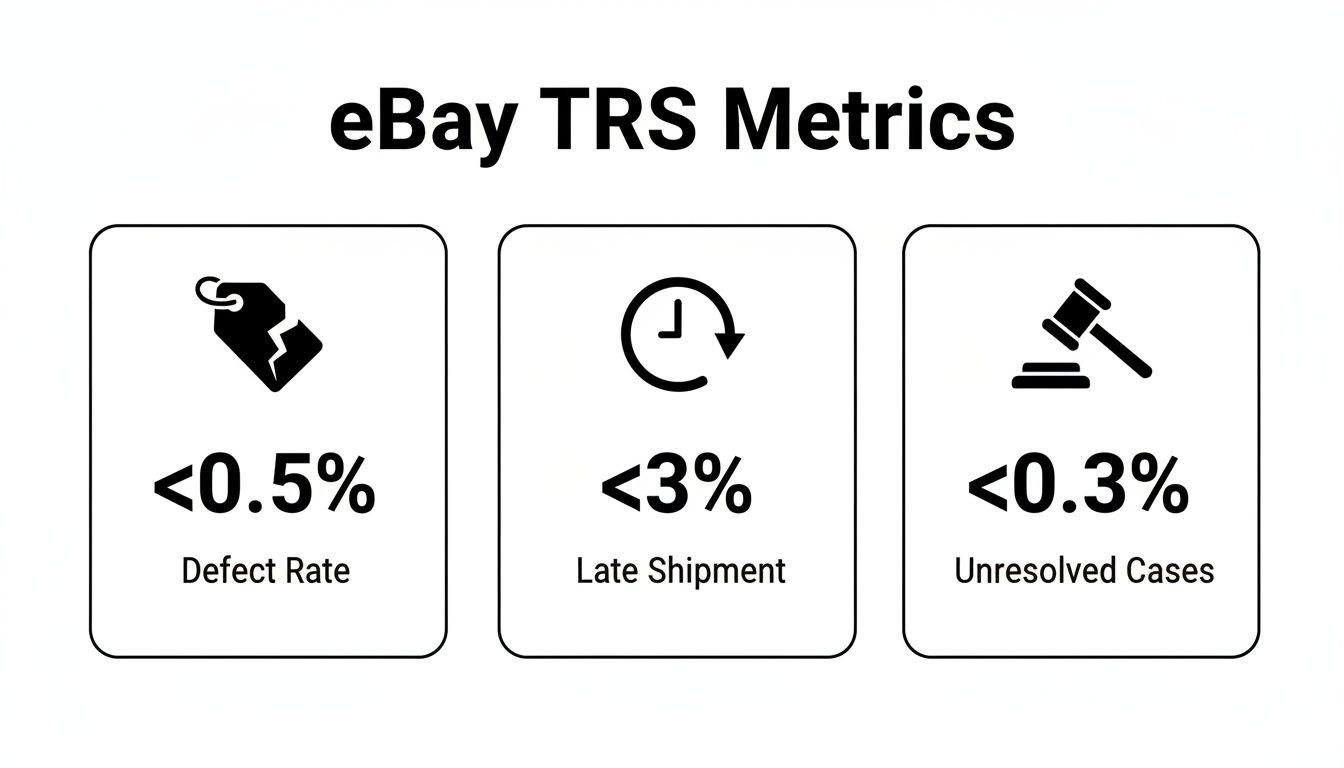
As you can see, the margins are incredibly thin. This requires near-perfect discipline in your operations.
The path to the Top Rated Seller badge is a marathon, not a sprint. It's built on hundreds of successful transactions where you meet or exceed buyer expectations every single time. One or two mistakes can set you back significantly.
Let’s put some hard numbers to this. To get the badge, sellers must meet some very precise thresholds. This table lays out the minimums you need to hit in the US.
eBay Top Rated Seller Minimum Performance Standards
This table summarizes the core metrics and transaction requirements you have to meet to qualify for Top Rated Seller status.
| Metric | Required Threshold | What It Measures |
|---|---|---|
| Sales Volume | 100 transactions and $1,000 in sales | Your sales activity over the past 12 months |
| Transaction Defect Rate | ≤ 0.5% | Seller-cancelled transactions and unresolved cases |
| Late Shipment Rate | ≤ 3% | Shipments sent after handling time or without tracking |
| Cases Closed Without Seller Resolution | ≤ 0.3% | Disputes requiring eBay's intervention to resolve |
Meeting these standards shows eBay you’re a reliable partner in their marketplace, and they’ll reward you for it.
And hey, if you're still weighing your options and trying to figure out where to sell, our guide on conducting a marketplace evaluation test can help you compare platforms like eBay against others based on what makes sense for your business.
Building a Bulletproof Shipping and Handling Workflow
Your shipping and handling process is where the rubber meets the road on your journey to becoming a Top Rated Seller. A single day of delays or a handful of untracked packages can easily knock your late shipment rate out of compliance. Creating a bulletproof workflow isn't about working harder; it’s about working smarter.
This means moving beyond just dropping packages off at the post office when you have time. Top sellers operate with precision, turning fulfillment into a repeatable, efficient system. This approach is absolutely essential for protecting your metrics and delivering the kind of experience that earns positive feedback.
Your Seller Dashboard gives you a clear, data-driven look at your shipping performance.
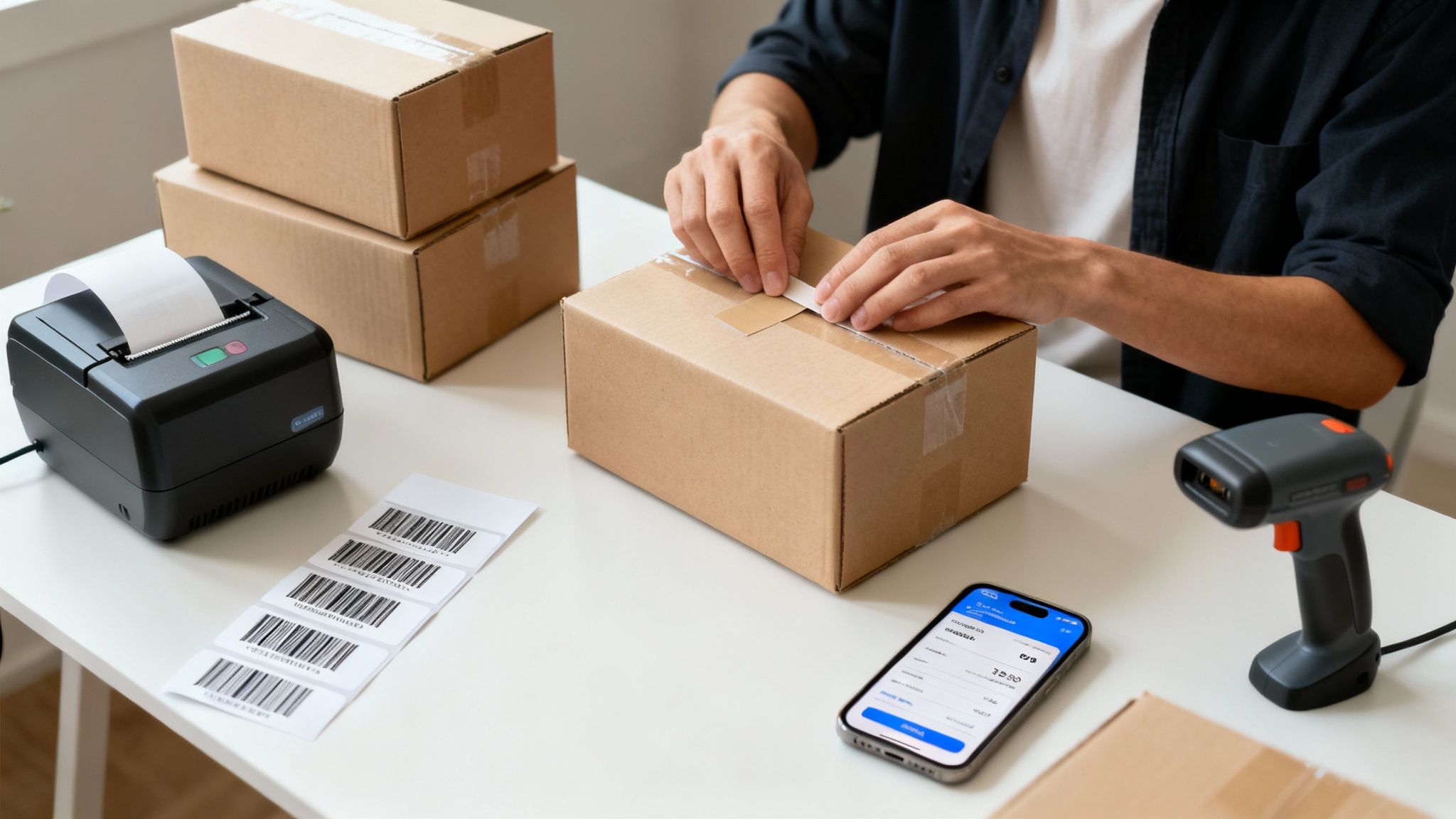
This dashboard is your single source of truth, showing exactly how eBay grades your on-time shipping and tracking validation.
Engineer Your Handling Time for Success
Think of your stated handling time as a promise to your customer. Breaking that promise directly torpedoes your late shipment rate. The key here is a classic "under-promise and over-deliver" strategy: set a realistic timeframe you know you can consistently beat.
If you can ship most orders the same day but occasionally need an extra day for whatever reason, set your handling time to 1 business day. This creates a manageable buffer for unexpected hiccups without appearing slow to buyers. I'd strongly advise against setting same-day handling unless you have an absolutely rock-solid process to back it up.
That small buffer is your safety net, ensuring you consistently meet expectations and keep that late shipment rate well within the green.
Implement a Daily Cut-Off Time
One of the most effective habits of high-volume sellers is a firm daily order cut-off time. For example, you might decide that any order placed before 2:00 PM ships the same day, while anything after that time goes out the next business day.
This simple rule brings much-needed structure to your day. It eliminates the constant pressure to pack orders as they trickle in and lets you batch-process all shipments at once, which is a far more efficient way to work.
- Morning: Focus on answering messages, listing new items, and managing inventory.
- Afternoon (Post-Cutoff): Switch gears to printing labels, picking and packing all of the day's orders, and scheduling a carrier pickup or drop-off.
This structured approach is a cornerstone of learning how to scale an ecommerce business effectively. It prevents fulfillment from becoming a chaotic bottleneck as your sales start to climb.
The Critical Role of Tracking Uploads
Uploading valid tracking information on time is non-negotiable. It's not enough to just print a label; eBay's system needs to see a carrier scan within your stated handling time to mark the shipment as on-time. The package has to be physically in the carrier's hands.
A common pitfall for new sellers is dropping packages in a collection box without getting an immediate acceptance scan. If the carrier doesn't scan it until the next day, that shipment could be marked as late, even if you dropped it off on time.
To avoid this, always get a receipt or use a carrier scan form (often called a SCAN form for USPS). This single barcode lets the carrier scan all your packages at once, giving you immediate proof that they've accepted the shipment. That one action validates your on-time handling for every single order on that form.
The importance of this process really can't be overstated. eBay’s entire system is built on data, and the platform’s public reporting highlights a relentless focus on seller performance tools. Industry analysis confirms that top sellers, some with millions of items sold and 99%+ positive feedback, are heavily differentiated by their fast shipping scores. Dialing in your fulfillment isn't just about meeting metrics—it's about building a reputation that drives serious growth.
Crafting Listings That Prevent Defects and Disputes
That transaction defect rate? It’s the tightest and most unforgiving metric you'll face on your journey to becoming a Top Rated Seller. Even a handful of slip-ups can easily push you over the 0.5% threshold. Your product listings are your absolute first line of defense here—think of them as a contract between you and your buyer. Getting them right isn't just about making a sale; it’s about stopping problems before they even have a chance to start.
When you look at what causes defects, two culprits stand out: out-of-stock cancellations and "item not as described" cases. The good news is both are almost entirely within your control. It all comes down to disciplined listing and inventory habits. A clear, honest, and ridiculously detailed product page sets the right expectations from the get-go, filtering out mismatched buyers and building the kind of trust that earns positive feedback.

Embrace Radical Honesty in Your Descriptions
I’ve seen it a thousand times: sellers make the mistake of overselling an item's condition. It’s tempting to only talk about the good stuff, but that strategy backfires in a big way when the buyer finds a flaw you "forgot" to mention. The goal here is radical honesty. Your job is to describe the item so well that the buyer feels like they’ve already held it in their hands.
This means pointing out everything—the good, the bad, and the neutral. Selling a used laptop with a tiny scratch on the lid? Don't just mention it; take a close-up photo under bright light. Listing a vintage t-shirt? You better include precise measurements from pit-to-pit and collar-to-hem, because a "Large" from 1995 fits way different than a "Large" today.
This level of detail doesn't scare off serious buyers. It attracts them. It shows you’re transparent and builds confidence. For more on this, it's worth learning about writing compelling product descriptions that set clear expectations and prevent headaches later.
An honest description that highlights a minor flaw is infinitely better than a glowing description that creates a disappointed customer. The first builds trust; the second creates a defect.
Use High-Quality Photos as Undeniable Proof
Your photos aren't just marketing—they're your evidence. They back up every single claim in your description and are your most powerful tool for shutting down "item not as described" disputes. A buyer can argue with your words, but it’s a lot harder to argue with a crystal-clear photograph.
Make sure your photography process includes these non-negotiables:
- Use Multiple Angles: Show the front, back, top, bottom, and sides. If it has internal parts, open it up and show what’s inside.
- Highlight Key Features: Get close-ups of brand tags, model numbers, unique textures, or connection ports.
- Showcase All Flaws: Photograph every single scratch, scuff, stain, or tiny imperfection you mentioned. Make them impossible to miss.
- Provide Scale: Put a ruler or a coin next to the item. This gives buyers an immediate and unmistakable sense of its actual size.
These principles for visual proof aren't just for eBay. They work across all e-commerce platforms. In fact, many sellers find that what works on eBay is also highly effective elsewhere, a concept covered in guides on how to optimize Amazon product listings.
Master Your Inventory to Prevent Overselling
The other major cause of transaction defects is cancelling an order because you ran out of stock. This is a completely avoidable mistake, and it sends a loud signal to eBay that your operation is disorganized. It doesn't matter if you have ten items or ten thousand; you need a bulletproof system for tracking what you have.
When you're starting out, a simple spreadsheet can do the trick. Just create columns for the item name, SKU, quantity on hand, and where it's stored. Every time you list an item, update the count. The second it sells, update it again. No excuses.
As you scale, you’ll want to invest in dedicated inventory management software. These tools sync your stock levels across multiple platforms in real-time, automatically delisting an item from eBay the moment it sells somewhere else. Preventing even a single out-of-stock cancellation is a massive step toward protecting your defect rate and locking in that Top Rated Seller status.
Product Sourcing And Pricing For TRS Velocity
Let's be real: getting that Top Rated Seller badge is more than just providing great customer service. You have to hit the numbers first. That means reaching 100 transactions and $1,000 in sales, and the fastest way to get there is by having the right products.
Think of it as a numbers game. You need products that sell consistently and don't cause headaches. Sourcing smart and pricing right is what builds the momentum you need to cross that finish line. You want items that are easy to describe accurately, simple to pack, and always in demand. This strategy naturally cuts down on "item not as described" claims and keeps the sales rolling in.

Uncovering High-Demand Niches
Guessing what will sell is a recipe for a garage full of dead stock. Forget guesswork—the most reliable strategies are built on eBay's own data. This is where a tool like eBay Terapeak becomes your best friend. It’s included for free with a Basic store subscription or higher, and it's invaluable for seeing what's actually selling, how often, and for how much.
Instead of chasing flashy, trendy items that might be hot today and gone tomorrow, focus on evergreen categories. Things like sneakers, consumer electronics, collectibles, and auto parts have consistently high search volume and solid resale margins. Tapping into these established markets gives you access to a huge, active buyer base, making it much easier to hit your transaction targets. To learn more about finding these goldmines, check out our in-depth guide on what sells on eBay well.
Analyzing Sold Listings To Set Realistic Prices
The single most powerful pricing tool you have is eBay's "Sold Listings" filter. Forget what sellers are asking for an item; this filter shows you what buyers are actually paying right now. It's pure, real-world data that cuts through the noise of overpriced listings that just sit there.
Your goal isn't to have the highest price on eBay; it's to have the right price to make a fast sale. The velocity from selling ten items at a fair market price is far more valuable for your TRS journey than one overpriced item sitting for months.
When you’re setting your price, aim to be competitive with the most recent sales. Data shows that pricing your item within 5–15% of the recent sold-price median gives you the best shot at a quick conversion. This practical approach, combined with insights from tools like Terapeak, can boost your sell-through rate by 10–30% and seriously speed up your path to Top Rated Seller.
Strategic Pricing Tactics To Accelerate Sales
If you just "set it and forget it" with your pricing, you're leaving money and sales on the table. To build the kind of velocity you need for TRS, you have to be proactive. Different pricing strategies appeal to different buyers and can be just the push someone needs to click "Buy It Now."
I've put together a quick comparison to show you how different strategies can work for you.
Pricing Strategy Comparison for eBay Sellers
Choosing the right pricing model can make or break your sales velocity. Below is a breakdown of common strategies and how they align with the goal of achieving Top Rated Seller status.
| Pricing Strategy | Best For | Potential Impact on TRS Metrics |
|---|---|---|
| Fixed Price (Buy It Now) | Standardized items with a known market value. | Creates predictable sales and simplifies inventory management, which helps prevent out-of-stock defects. |
| Best Offer | Unique or used items where value is subjective. | Initiates buyer engagement and can lead to a quick sale, increasing your transaction count faster. |
| Promotions & Sales | Clearing old stock or boosting visibility on new items. | Drives a surge in sales volume, helping you quickly meet the 100-transaction requirement. |
As you can see, each strategy serves a purpose. Using them thoughtfully can significantly impact how quickly you reach your goals.
For example, enabling the 'Best Offer' feature is a fantastic way to turn watchers into buyers. It opens a conversation and often leads to a quick sale. Likewise, running a small sale—even just 10% off for a weekend—creates a sense of urgency that can convince a hesitant buyer to commit.
Ultimately, all these tactics are designed to do one thing: crank up your transaction velocity so you can hit those TRS metrics and get the badge you've earned.
Delivering Customer Service That Protects Your Metrics
Think of exceptional customer service as the glue that holds your Top Rated Seller ambitions together. While fast shipping and accurate listings prevent problems, your communication skills are what solve the unexpected issues that always pop up. This is where you directly protect your most fragile metrics, especially the dreaded "Cases closed without seller resolution."
Your approach to a customer complaint can be the difference between a defect and a five-star review. It’s all about being proactive, staying professional, and getting ahead of a potential dispute before it even starts. If you want to learn how to get top rated seller status on eBay, mastering this part is non-negotiable.
Proactive Communication Is Your Best Defense
The absolute best way to handle a problem is to get out in front of it. Buyers are far more forgiving when you’re the one who brings an issue to their attention. Silence, on the other hand, just breeds suspicion and frustration, which is a fast track to a buyer opening a case.
Let's say you’re packing an item and notice a small flaw you missed in the listing. Don’t just ship it and hope for the best. Send a message right away: "Hi [Buyer Name], while preparing your item, I noticed a small scuff on the corner that wasn't clear in the photos. I've attached a new picture. I'm happy to ship it with a partial refund of [Amount], or I can cancel and issue a full refund immediately. Please let me know what you'd prefer. My apologies for the oversight."
This kind of transparency builds serious trust. It puts the buyer in control and can stop a potential "item not as described" case dead in its tracks.
Handling The Dreaded Unresolved Case Metric
The "Cases closed without seller resolution" metric has a razor-thin tolerance of just 0.3%. To put that in perspective, you can only have one of these for every 334 transactions. You have to treat every single case opened against you with extreme urgency.
Once a case is opened, eBay typically gives you three business days to respond and fix the problem. Never, ever ignore this deadline. If you fail to act within that window, the buyer can ask eBay to step in. The second that happens—and eBay sides with them—you get a defect.
The golden rule is simple: Always respond and always offer a resolution. Even if you think the buyer is wrong, sending a return label or a refund is infinitely better than taking a defect that threatens your TRS status.
Templates for Professional and Efficient Responses
Having a few pre-written templates on hand saves time and keeps you sounding professional, even when you're dealing with a frustrating situation. Tweak them for each scenario, but the core structure will keep you on track.
For a "Where is my item?" inquiry:
- Initial Response: "Hi [Buyer Name], thanks for reaching out. I've checked the tracking ([Tracking Number]), and it shows the package is currently [Last Scan Status]. It looks like it's still moving, but I will keep a close eye on it. If there are no updates by [Date], let me know, and I'll open a case with the carrier."
For a return request:
- Accepting the Return: "Hi [Buyer Name], I'm sorry to hear the item didn't work out. I've accepted your return, and the prepaid shipping label is attached. Please pack the item securely and drop it off when you can. I’ll issue a full refund as soon as it arrives back."
These templates are calm, informative, and move things toward a solution without getting emotional. Protecting your metrics requires a serious commitment to excellent customer service. To learn more, check out these best practices in customer service.
Turning Negative Feedback into a Positive
Getting negative feedback feels like a punch to the gut, but how you respond is what every future buyer will see. Never get into a public argument. Instead, leave a calm, professional reply that shows you take ownership.
For example, if feedback says, "Item arrived with a broken part," a great response would be: "My sincere apologies for the issue. A full refund was issued to the buyer immediately. Customer satisfaction is my top priority."
This tells future customers that even when mistakes happen, you make things right. It's a powerful way to demonstrate your commitment to quality service, turning a negative into a net positive for your reputation. Modern tools can help create a more engaging buyer journey, and some platforms use ecommerce personalization software to improve the customer experience from start to finish.
Common Questions About Becoming a Top Rated Seller
Even with the requirements laid out, real-world selling on eBay can bring up some tricky questions on the path to becoming a Top Rated Seller. The basics are one thing, but figuring out the nuances is what gets you over the finish line.
Here, we'll tackle the most common questions sellers have. We’ll cover how long it really takes, the difference between a couple of key eBay programs, and what it takes to hold onto that hard-earned status. Getting these details right will help you build a smarter, more sustainable strategy.
How Long Does It Take To Become a Top Rated Seller?
There’s no magic number here—it all comes down to your sales velocity and how consistently you meet the performance standards. The one hard rule is that your account has to be active for at least 90 days. After that, it's a race to hit the benchmarks.
The core requirements are 100+ transactions and $1,000+ in sales over the last 12 months.
If you're a high-volume seller moving lots of low-cost items, you might hit the transaction count in just a few months, as long as your service is perfect from day one. But if you sell high-value, low-volume goods, it could take you the better part of a year. The most important thing is keeping your service metrics spotless the entire time, no matter how long it takes.
What Is the Difference Between Top Rated Seller and PowerSeller?
This is a common point of confusion, but they are two totally separate programs. Think of PowerSeller as a legacy badge of honor. It was awarded based purely on sales volume, with tiers like Bronze, Silver, and Gold for sellers who moved a lot of product. It was all about quantity.
Top Rated Seller, on the other hand, is the modern seal of approval. It's all about the quality of your customer service, not just your sales numbers. It's your low defect rate, on-time shipping, and quick case resolution that earn you this status. You could be a PowerSeller with so-so service, but the TRS badge is what tells buyers you’re truly reliable.
Think of it this way: PowerSeller tells buyers you sell a lot. Top Rated Seller tells buyers you sell well. In today's competitive market, the second one is what really counts.
Can I Lose My Top Rated Seller Status?
Yes, you absolutely can. Earning Top Rated Seller status isn't a one-and-done achievement; it’s a standard you have to live up to every single day. eBay re-evaluates every seller's performance on the 20th of each month.
If your metrics from the last evaluation period fall below the required thresholds, you’ll lose the status and all the perks that come with it. A few late shipments during a crazy week or a couple of transaction defects are all it takes to get knocked off the pedestal. This is why you need to live in your Seller Dashboard, constantly monitoring your numbers to catch and fix issues before they threaten your standing.
Do I Have to Offer Free Returns To Be a Top Rated Seller?
This is a bit of a two-part answer.
To earn the basic Top Rated Seller badge that appears on your profile, you do not have to offer free returns. Just meeting the core performance standards for shipping, defects, and case resolution is enough to get the title.
However, if you want to unlock the really valuable Top Rated Plus benefits on your individual listings, you have to meet stricter criteria. These perks include that shiny Top Rated Plus seal on your listings and, more importantly, a 10% discount on final value fees.
To qualify for Top Rated Plus, a specific listing must offer:
- Same-day or 1-business-day handling.
- A 30-day (or longer) free return policy.
So, while free returns aren't mandatory for the base status, they are the key to unlocking the program's biggest financial rewards.
At Next Point Digital, we specialize in turning these complex marketplace requirements into simple, scalable growth strategies. If you're ready to optimize your eBay presence and convert clicks into loyal customers, our team can build the data-driven roadmap to get you there. Visit us at https://npoint.digital to learn more.