

So, what exactly is Walmart Marketplace? Think of it less like a platform and more like an invitation to open a specialty shop inside one of the world's biggest retail stores. It’s a third-party seller program that lets you list and sell your products right on Walmart.com, putting your brand directly in front of millions of shoppers.
Understanding the Walmart Marketplace Opportunity
Instead of building a new store from scratch and spending a fortune trying to attract customers, you get to set up shop where a massive, built-in audience already is. You're placing your products directly on the digital shelves of a retailer that people already know and trust. This is your chance to tap into Walmart's incredible brand recognition, website traffic, and powerful logistics network.
The "digital mall" idea is the perfect way to grasp its value. While Walmart sells its own inventory, it also opens its online aisles to approved sellers like you. This creates a win-win-win situation:
- Customers get a much bigger product selection, finding everything they need in one spot.
- Sellers get immediate access to a loyal customer base without the crushing costs of building and marketing a standalone e-commerce site.
- Walmart seriously beefs up its online catalog, allowing it to compete head-to-head with other retail giants.
For brands looking to grow, this isn't just another sales channel. It's a strategic move, especially if you're looking to diversify away from platforms like Amazon. And the growth has been nothing short of explosive.
Walmart Marketplace has blown up in popularity, hitting a massive milestone by surpassing 200,000 active third-party sellers for the first time in mid-2025. This rapid expansion showcases its emergence as a critical player in the world of digital marketplaces.
To give you a better snapshot, here’s a quick rundown of what makes the platform tick.
Walmart Marketplace at a Glance
| Feature | Description |
|---|---|
| Seller Count | Over 200,000 active third-party sellers as of mid-2025. |
| Customer Base | Access to millions of loyal shoppers who visit Walmart.com and the app. |
| Primary Model | Third-party sellers list and sell products alongside Walmart's own retail items. |
| Key Advantage | Leverage Walmart's established brand trust, massive traffic, and logistics. |
| Growth Rate | Added a remarkable 44,000 new sellers in the first five months of 2025 alone. |
| Fulfillment | Options include seller-fulfilled, Walmart Fulfillment Services (WFS), or a third-party partner. |
This table really puts the opportunity into perspective. The growth is undeniable, making it a platform that serious brands can't afford to ignore.
A Platform Built on Trust and Reach
One of the biggest perks of selling here is the built-in trust shoppers have in the Walmart brand. When a customer buys from a Marketplace seller, they're doing it with the confidence that comes with the Walmart name. That alone can give your conversion rates a serious boost from day one.
The platform's seller homepage is your gateway to getting started.
This portal is your command center. It’s where you’ll manage listings, track how you’re doing, and get support. For any brand thinking about expanding, just understanding what Walmart Marketplace is becomes the first step toward tapping into this booming e-commerce environment.
The real opportunity isn't just about listing products; it's about strategically placing your brand inside a trusted, high-traffic retail universe. The platform's incredible seller growth is a clear signal of its potential, with a staggering 44,000 new sellers joining in just the first five months of 2025. You can dig deeper into the platform's growth stats over at Teikametrics.com.
How Selling on Walmart Marketplace Actually Works
So, you understand the concept of Walmart Marketplace. Great. Now let's get into how the gears actually turn for a seller. It’s not as simple as just uploading a product and watching the sales roll in. Think of it more like a structured partnership where you have to meet Walmart's standards to get in front of their massive audience.
The whole journey kicks off with a pretty rigorous application process. Walmart is selective here—they’re looking for established businesses with a real track record in ecommerce. This isn't a "start your first business here" kind of platform; it's a growth channel for sellers who already know what they're doing.
Before you even think about applying, you'll need to have a few non-negotiable things in order.
The Seller Application Essentials
Before you can list a single product, you need to prove your business is legitimate and reliable. This vetting process is how Walmart protects its brand and keeps a high standard of quality across its digital aisles. It’s all about trust.
You'll need to have these items ready:
- A U.S. Business Tax ID: Your Social Security Number won't cut it. You need a formal business structure.
- W-9 or W-8 and an EIN Verification Letter: This is the official paperwork from the Department of the Treasury that verifies your Tax ID.
- A U.S. Business Address: This covers both your physical operations and a return address. No P.O. boxes.
- Planned Integration Method: You have to tell them how you'll manage your listings—whether through an API, a solution provider like Shopify, or by uploading spreadsheets.
- A History of Marketplace Success: This is a big one. Showing them you've done well on other platforms like Amazon or eBay gives you a serious leg up.
Once Walmart gives you the green light, you'll get access to the Seller Center. This is your command center for everything. From there, it's a sprint to get your store live. For a deep dive on every step, check out our complete guide on how to sell on Walmart Marketplace.
Onboarding and Going Live
After you’re approved, the race to your first sale is on. Inside your Seller Center dashboard, you’ll find a "Launch Checklist" waiting for you. This is a series of must-do steps to activate your account, like setting up payments with Payoneer or Hyperwallet, configuring your shipping settings, and uploading your first batch of products.
A critical piece of the puzzle here is understanding intellectual property protection. You need to make sure all your listings are compliant and that your brand is protected from day one. Once you’ve checked off every item on that list, you’re officially ready to sell.
The basic flow of a transaction is pretty straightforward, as you can see below.
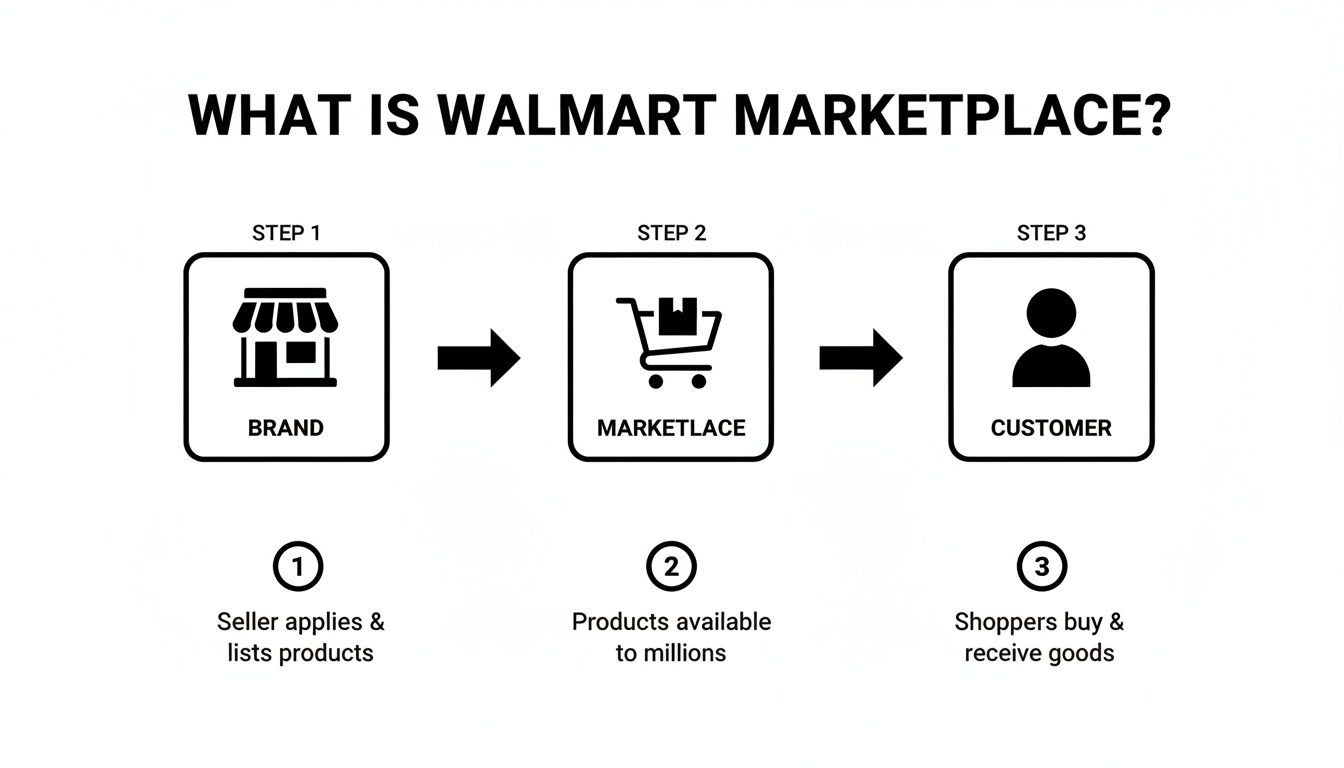
This simple journey—from your brand, to the marketplace, to the customer—is powered by a huge decision you need to make right away about fulfillment.
Choosing Your Fulfillment Strategy
Maybe the most important operational choice you'll make is how you actually get your products into customers' hands. Walmart gives you two main paths, and the right one really depends on your business model, budget, and inventory.
Walmart Fulfillment Services (WFS): This is Walmart's version of Amazon FBA. You ship your inventory to Walmart's fulfillment centers, and they take over from there. They handle storage, picking, packing, shipping, and even customer service for any fulfillment-related questions.
Using WFS gets your products that coveted TwoDay delivery tag and the "Fulfilled by Walmart" badge. These are huge trust signals for shoppers and can give your products a serious boost in visibility. It’s a fantastic option if you want to offer lightning-fast shipping without the logistical headaches.
Of course, you can always handle it yourself or with a partner.
- Seller-Fulfilled: With this model, you’re on the hook for everything—storing your inventory, packing boxes, and shipping orders. You get total control, but you also need the warehouse space, staff, and systems to meet Walmart's tough shipping standards.
- Third-Party Logistics (3PL): You can also team up with a 3PL provider that integrates with Walmart Marketplace. This is a great middle ground, giving you expert logistics support while letting you keep more control over your inventory than you would with WFS.
Picking the right fulfillment method isn't just a small detail; it’s fundamental. It directly impacts your costs, your daily workload, and your ability to compete. This one decision will shape your entire experience selling on Walmart.
Understanding the Walmart Marketplace Fee Structure
One of the first things that catches your eye about Walmart Marketplace is its fee structure—or lack thereof. Unlike a lot of other platforms, Walmart charges no monthly subscription or setup fees. This is a huge deal because it completely removes the upfront financial hurdle, letting you list your products and get in front of their massive customer base without spending a dime.
Instead of a monthly fee, Walmart keeps it simple with a pay-as-you-go model built around a referral fee. Just think of it as a commission. Every time you make a sale, Walmart takes a percentage of the total price, including shipping. It’s a performance-based system, meaning you only pay when you actually sell something.
This model is a game-changer for businesses of all sizes, especially if you’re trying to keep a close eye on your budget.
Breaking Down the Referral Fees
The referral fee isn't a flat rate; it changes depending on what you’re selling. Most categories fall somewhere between 8% and 15%. For example, things like consumer electronics tend to have lower fees, while apparel or home goods are on the higher end. Getting a handle on these rates is crucial for figuring out your profit margins.
Before you even think about listing a product, you need to understand how these fees will impact your bottom line. Our guide on how to determine the price of a product is a great resource for factoring this in so your pricing is both competitive and profitable.
To give you a better idea of what to expect, here’s a quick look at the referral fees for some of the most popular categories on the marketplace.
Walmart Marketplace Referral Fee Rates by Popular Category
The table below breaks down the percentage-based referral fees sellers pay on each sale for some of the biggest product categories. These rates are applied to the total sale price, including shipping.
| Product Category | Referral Fee Percentage |
|---|---|
| Apparel & Accessories | 15% |
| Electronics Accessories | 15% |
| Health & Personal Care | 8% for items ≤ $10; 15% for items > $10 |
| Home & Garden | 15% |
| Jewelry | 20% for items up to $250; 5% for portion > $250 |
| Pet Supplies | 15% |
| Toys & Games | 15% |
As you can see, the costs are straightforward and tied directly to sales. This makes it much easier to predict your expenses as you start to grow your business on the platform.
Factoring in Fulfillment Costs
Beyond the referral fee, the only other major cost you need to think about is fulfillment. If you decide to handle shipping yourself, your costs are whatever you negotiate with your carriers plus your own operational expenses. But if you jump into Walmart Fulfillment Services (WFS), there will be separate fees for storage and order processing.
WFS fees are broken down into two main parts:
- Fulfillment Fee: A flat rate per unit based on the item’s weight.
- Storage Fee: A monthly charge calculated based on the volume (cubic feet) your inventory occupies in Walmart's warehouses.
While this does add another line item to your budget, the payoff is often well worth it. Walmart Fulfillment Services has doubled its warehouse capacity since 2023, and sellers who use it saw a 50% lift in gross merchandise value (GMV) on items with the "Walmart Fulfilled" and "2-Day Shipping" tags in the year ended June 30, 2025.
On top of that, Walmart growth insights on teikametrics.com show that WFS orders run about 15% cheaper per item than competitors, making it a powerful and cost-effective way to scale.
Using Seller Tools to Drive Growth

Getting your products listed on Walmart Marketplace is just the start. If you want to actually succeed, you need to stop thinking of your listings as "set it and forget it" and start actively managing them. This means getting your hands dirty with the tools inside Seller Center to drive visibility, boost sales, and make data-backed decisions that actually move the needle.
Think of Seller Center as your command center, not just an admin panel. It's where you sharpen your product listings to catch search traffic, launch ad campaigns to find ready-to-buy shoppers, and dig into performance data to find what's working and what's not. Getting good with these tools is what separates the top sellers from everyone else.
Optimizing Your Product Listings for Search
Your product listing is your digital storefront on Walmart, and optimizing it for their search algorithm isn't optional. Just like on Google, Walmart uses a complex system to rank products, and a well-built listing can make all the difference in getting seen. This whole process is often called Listing Quality Optimization (LQO).
A higher LQO score means your product is way more likely to show up at the top of search results. Key factors include:
- Strategic Titles: Write clear, descriptive titles with your main keyword, brand name, and key details like size or color.
- Detailed Descriptions: Don't just list features. Use bullet points to highlight the benefits and tell a quick story about how your product solves a real problem for the customer.
- High-Quality Imagery: Use a bunch of high-res images and videos showing your product from every angle and in use.
- Backend Attributes: Fill out every single relevant field in the backend. This data is what helps Walmart's algorithm categorize your product and show it to the right people.
Improving your LQO is the most important thing you can do to get organic traffic and sales.
Amplifying Reach with Walmart Connect
Once your listings are dialed in, it's time to throw some fuel on the fire with paid ads. Walmart Connect is the platform's advertising engine, letting you run targeted campaigns that put your products right in front of customers who are actively looking to buy. It's the digital version of paying for premium shelf space in a physical store.
The go-to tool inside Walmart Connect is Sponsored Products. These ads pop up in search results, on product pages, and all over the site, giving your items a huge visibility boost. Best of all, you only pay when a shopper clicks, making it a smart way to drive targeted traffic without breaking the bank.
These campaigns are a must for launching new products, pushing seasonal items, or just defending your turf from competitors. Just as finding influencers on Amazon can be a game-changer there, getting the hang of Walmart Connect is critical for growth here.
Turning Analytics into Action
Data is your best friend on Walmart Marketplace. Seller Center has a solid set of analytics dashboards that give you a deep look into how your business is doing. Don't let that data just sit there—use it to make smarter, faster decisions.
Here are the key dashboards to keep an eye on:
- Listing Quality Dashboard: This tool scores your listings and gives you specific, actionable tips on how to improve them.
- Performance Dashboard: This is where you track your Seller Scorecard metrics, like on-time shipping and order defect rates, to make sure you stay in Walmart's good graces.
- Sales & Inventory Reports: Monitor what’s selling, what’s not, and when you need to reorder to avoid going out of stock, especially during busy seasons.
By checking this data regularly, you can spot trends, manage your inventory better, and fine-tune your ad strategies. This information is also crucial for creating personalized shopping experiences, which is a big part of how modern sales funnels work. Learning about ecommerce personalization software can help you connect these dots and turn insights into a better customer journey. Ultimately, these tools empower you to be a proactive seller who is always improving and adapting.
Thinking about where to sell your products is a huge decision. Like any platform, Walmart Marketplace comes with its own unique mix of big advantages and potential hurdles. Getting a clear view of both sides is key to setting the right expectations and making sure it’s the right move for your brand.
For many businesses, the biggest draw is getting instant access to a massive, built-in audience. You’re not just opening another online store; you’re setting up shop inside one of the busiest retail ecosystems on the planet.
The Upsides of Selling on Walmart
The perks of joining the marketplace go way beyond just getting more eyeballs on your products. You also get to tap into decades of consumer trust and a simple fee structure that makes your financial planning a lot easier.
- Massive Customer Reach: You get to put your products in front of Walmart's enormous customer base. Their online presence is exploding, pulling in a record $120.9 billion in e-commerce revenue in FY2025—a 20.8% jump from the year before. This growth is driven by 120 million unique visitors every single month, giving your brand an incredible shot at exposure. You can see more on Walmart's impressive growth on CapitalOneShopping.com.
- Less Seller Competition: Even though it's growing fast, the marketplace still has way fewer sellers than Amazon. That means your brand has a much better chance to stand out, grab market share, and build a real presence without getting drowned out by the noise.
- Borrowed Brand Trust: People trust Walmart. When you sell on their platform, a bit of that trust rubs off on your brand. This can lead to higher conversion rates because shoppers feel more confident hitting that "buy" button.
- Simple Fee Structure: There are no monthly subscription fees, which keeps the barrier to entry super low. You only pay a referral fee when you actually make a sale, making it easy to predict and manage your costs.
Potential Challenges to Consider
While the opportunities are huge, it’s just as important to know what you’re getting into. Walmart holds its sellers to high standards, and its platform is still maturing in some ways compared to its older competitors.
A key thing for new sellers to remember is the strict approval process. Walmart carefully vets everyone to keep the marketplace high-quality and trustworthy, which can be a roadblock for newer brands that don't have a long history of e-commerce success.
This selective approach is by design, but it’s something you need to be ready for.
Here are a few other potential downsides:
- Strict Seller Requirements: Like I mentioned, getting approved isn’t a sure thing. You’ll need a registered U.S. business, a proven track record on other platforms, and solid fulfillment capabilities.
- Maturing Seller Tools: Walmart's seller tools and ad platform (Walmart Connect) are powerful and getting better all the time, but they're still evolving. If you’re used to more established systems, you might find some features or analytics aren’t quite as developed yet—though that gap is closing fast.
In the end, the choice to sell on Walmart Marketplace is a trade-off. You get access to an immense, trusted retail world with less competition, but in return, you have to meet high standards and work with a platform that's still in a major growth phase. For established brands ready to scale, the pros almost always outweigh the cons.
Partner with Next Point Digital to Master the Marketplace

Getting a handle on Walmart Marketplace makes one thing crystal clear for any growing brand: this is a vital, high-growth sales channel that rewards smart execution. But success isn't as simple as uploading your catalog and waiting for the sales to roll in. It demands a real strategy for every step of the seller journey.
Real growth comes from mastering the platform’s unique ecosystem. You need optimized listings to climb the search rankings, the right fulfillment strategy to keep customers happy, and ad campaigns that actually deliver a return on investment. It's a lot of moving parts.
This is exactly where having an expert partner makes all the difference.
Your Strategic Roadmap to Walmart Success
At Next Point Digital, we turn marketplace potential into measurable performance. Our team doesn't just give advice; we offer a hands-on partnership that cuts through the complexity of selling on Walmart and gets you on the fast track to growth.
We guide brands through every critical stage:
- Seamless Onboarding: We make sure your application is buttoned up and compelling, helping you fly through the approval process and get your storefront live.
- Listing and Content Optimization: Our marketplace SEO experts build product listings that rank higher, attract the right buyers, and turn clicks into customers.
- Fulfillment Strategy: We'll help you break down your business needs to figure out the best fulfillment model, whether it's WFS, handling it yourself, or bringing in a 3PL partner.
Our mission is to build a clear roadmap for your brand. We handle the technical details and strategic planning so you can focus on what you do best—creating great products. This partnership allows you to tap into our expertise and gain a significant competitive edge.
Getting this strategy right is more important than ever as the platform continues to explode. Walmart.com's trajectory—recently hitting $70.141 billion in net sales—translates to a massive opportunity for sellers. Agencies like ours thrive in this environment, using SEO, A+ content, and smart advertising to turn millions of monthly visitors into your loyal customers.
Let’s Build Your Growth Plan Together
Navigating Walmart Marketplace doesn't have to be a painful process of trial and error. With the right strategy and expertise in your corner, you can position your brand to capture a serious share of this expanding market. We're here to provide the data-driven insights and professional execution you need to not just compete, but to win.
If you're ready to unlock your brand's full potential, the next step is simple. Let's talk about your goals and build a custom strategy that fits your business.
Take a moment to fill out our digital marketplaces questionnaire. It will give us the insights we need to start crafting a powerful growth plan for your brand on Walmart Marketplace. Let’s start the conversation today.
Got Questions About Selling on Walmart? We’ve Got Answers.
Jumping into a new platform always brings up a few last-minute questions, no matter how prepared you are. We get it. To clear up any final uncertainties, here are some straight answers to the most common things sellers ask when they’re just getting started.
How Long Does It Take to Get Approved to Sell on Walmart?
It’s often quicker than you might think. For U.S.-based businesses with all their paperwork in order—like a U.S. Business Tax ID and a track record of ecommerce success—the process usually takes anywhere from a few days to two weeks.
The best way to speed this along? Submit a perfect application right from the start. Double-check that every field is filled out correctly and all your documents are uploaded. This helps you avoid the frustrating back-and-forth with Walmart's review team that causes most delays.
Can I Sell on Walmart if I Already Sell on Amazon?
Yes, absolutely—and frankly, you should. Walmart actually sees a successful history on other major marketplaces like Amazon or eBay as a huge plus. It proves you know the ropes of ecommerce, from managing inventory to handling customer service, making you a much lower-risk partner in their eyes.
Many of the top-performing brands on Walmart Marketplace also have a strong presence on Amazon. It's a smart multi-channel strategy that diversifies your income, connects you with different shoppers, and makes sure you're not relying on a single platform for all your sales.
Think of it this way: selling on both platforms isn't about choosing one over the other. It's about expanding your brand's total footprint in the digital retail world, capturing shoppers wherever they happen to be looking for your products.
What Is the Difference Between Walmart Marketplace and Walmart.com?
This is a common point of confusion, but the difference is pretty simple. Walmart.com is the entire website that customers shop on. Walmart Marketplace is the specific program that lets third-party businesses like you sell their products on that site.
When you're browsing Walmart.com, you'll see two types of product listings:
- Items listed as "Sold and shipped by Walmart" come from Walmart's own inventory.
- Items listed as "Sold and shipped by [Your Brand Name]" are from a third-party Marketplace seller.
In short, the Marketplace is like a "store-within-a-store," massively expanding the product selection available to customers, all under the trusted Walmart.com name.
Is Using Walmart Fulfillment Services (WFS) Mandatory?
Nope, using WFS is completely optional. Sellers are free to choose whatever fulfillment method works best for their business. You can ship orders from your own warehouse or work with another third-party logistics (3PL) provider.
That said, WFS is highly recommended for a reason. Enrolling your products in WFS automatically gives them the "Fulfilled by Walmart" badge and makes them eligible for the popular two-day shipping program. These are huge trust signals that can seriously boost your visibility in search and drive up conversion rates, because customers love fast, reliable delivery backed by Walmart.
Ready to stop wondering and start selling? The opportunity on Walmart Marketplace is immense, but navigating the complexities of optimization, advertising, and fulfillment requires expertise. Next Point Digital provides the strategic guidance and hands-on execution needed to scale your brand profitably. Let us build a custom roadmap to turn your marketplace potential into real-world results. Visit us at https://npoint.digital to learn how we can help you win.